

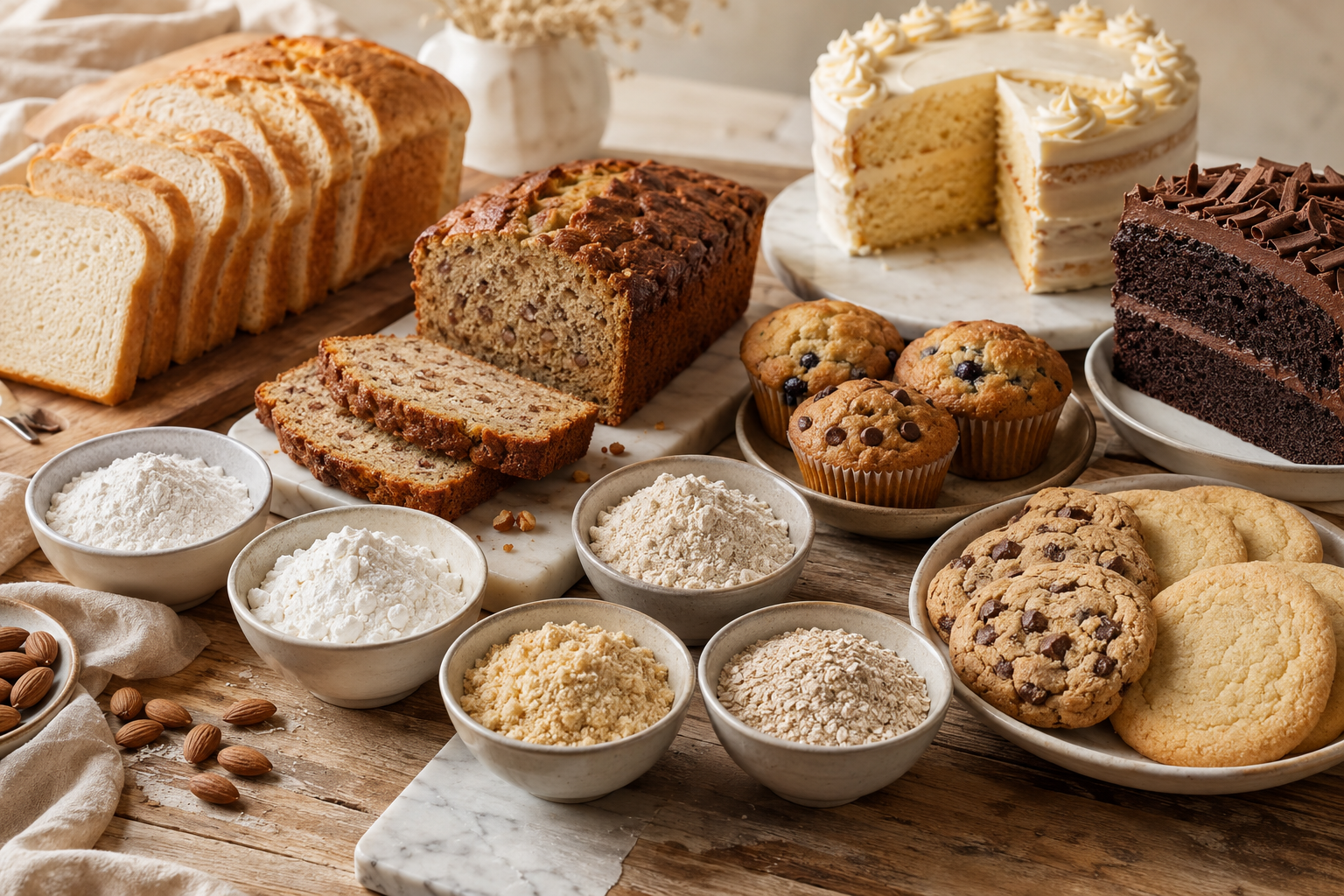
How to Make a Homemade Gluten-Free Flour Blend
- Choose your flours. Use a mix of whole-grain gluten-free flour and starch for the best texture.
- Add rice flour. Brown rice flour or white rice flour gives the blend structure and a mild base.
- Add sorghum flour. Sorghum adds softness and a gentle bakery-style flavor.
- Add tapioca starch. Tapioca gives chew and helps baked goods feel less crumbly.
- Add potato starch. Potato starch makes cakes, muffins, and breads lighter.
- Whisk very well. Combine everything in a large bowl and whisk for at least 1 minute so the blend is evenly mixed.
- Store properly. Transfer the flour blend to an airtight jar or container.
- Add binder when needed. For cakes and cookies, add xanthan gum if your recipe needs it. For bread, psyllium husk often gives better structure.
- Rest batters. Let cake batter, muffin batter, cookie dough, and pancake batter rest for 15 to 30 minutes before baking.
- Adjust by recipe type. Bread may need extra liquid and binder, cakes need light starches, and cookies often benefit from chilling the dough.
Healthy Tips & Daily Wellness
Gluten-free baking can be part of a balanced kitchen routine, especially when you use a variety of flours and pair baked goods with protein, fruit, and healthy fats.
For more nourishing baked goods, try mixing whole-grain gluten-free flours like sorghum, oat flour, millet flour, or buckwheat flour with lighter starches. This gives better flavor and a more satisfying texture.
For breakfast-style recipes, serve gluten-free bread or muffins with eggs, Greek yogurt, fruit, nut butter, cottage cheese, or smoothies. For desserts, enjoy cakes and cookies as treats and keep portions simple.
If you need gluten-free recipes for medical reasons, use certified gluten-free ingredients and avoid cross-contamination with regular flour, shared utensils, or shared baking surfaces.
