

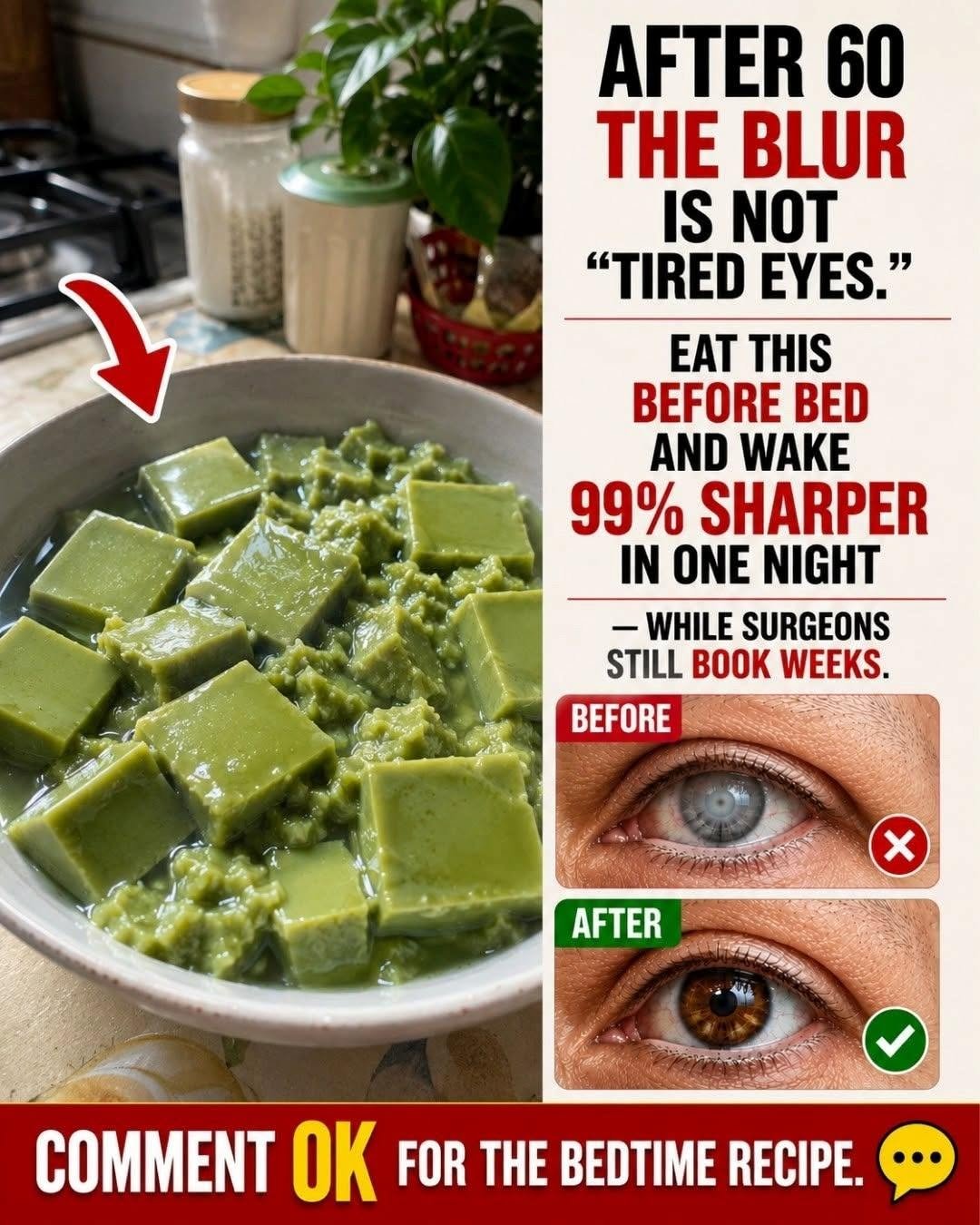
Here’s the hard truth. A green jelly will not lift a dense cataract by morning. Clinics schedule surgery because the lens is physically cloudy, not because someone skipped a bedtime snack.
Still, eye health after 60 is not a closed door. Research on lutein and zeaxanthin—pigments packed into leafy greens and egg yolks—shows these compounds collect in the macula and relate to slower AMD progression in people who already have intermediate disease when used in studied formulas.
 The Evening Foods That Support Eye Health After 60
Eye health after 60 tracks the same pigments that color dark greens. Cooked kale and spinach sit at the top of food lists for lutein. Egg yolk carries less lutein by weight, yet the fat in the yolk helps the body absorb it. Pair greens with olive oil or egg and the pigment has a better chance of arriving where it is needed.
The pain point is real: salads feel like “diet food,” and many people stop eating greens after 6 p.m. That gap matters because a late-day plate is often the last chance to add those pigments before sleep.
This is the interesting part. Eye health after 60 also leans on omega-3 fats from fish, vitamin C from produce, vitamin E from nuts and oils, and zinc from eggs, beans, and seafood. A Mediterranean-style pattern shows up again and again in AMD research.
Use this short list when dinner feels empty:
- Wilted spinach or kale with a teaspoon of olive oil
- One egg, or a yolk stirred into warm greens
- A palm-size piece of salmon or sardines a few nights a week
- Orange vegetables such as carrots or squash for mixed carotenoids
- A handful of berries or citrus for vitamin C
 The Green Bedtime Cup Inspired by Japanese Kanten
Eye health after 60 does not require a mystery cube from a viral ad. The green squares in those posts usually look like Japanese kanten—agar jelly—tinted with matcha. Kanten is a light, plant-based gel. Matcha adds catechins and a small amount of lutein, though spinach still dwarfs tea as a lutein source.
Think of the cup as a calm, low-sugar evening ritual—not a surgical substitute. Caffeine in matcha is lower than coffee, yet sensitive sleepers should keep the portion modest and finish it early enough that rest stays intact. Poor sleep itself worsens dry eye, which then worsens blur.
- 1 teaspoon kanten (agar) powder
- 300 ml water
- 1 teaspoon culinary matcha, whisked smooth in 2 tablespoons warm water
- Optional: a few drops of honey if you need a hint of sweetness
Bring water and agar to a boil and simmer 2 minutes until dissolved. Cool slightly, whisk in matcha, pour into a shallow dish, chill until set, and cut into cubes. Eat a small bowl 60–90 minutes before bed.
Eye health after 60 still needs the greens and the egg. The jelly is the habit hook. The pigments do the quiet work over weeks and months.
