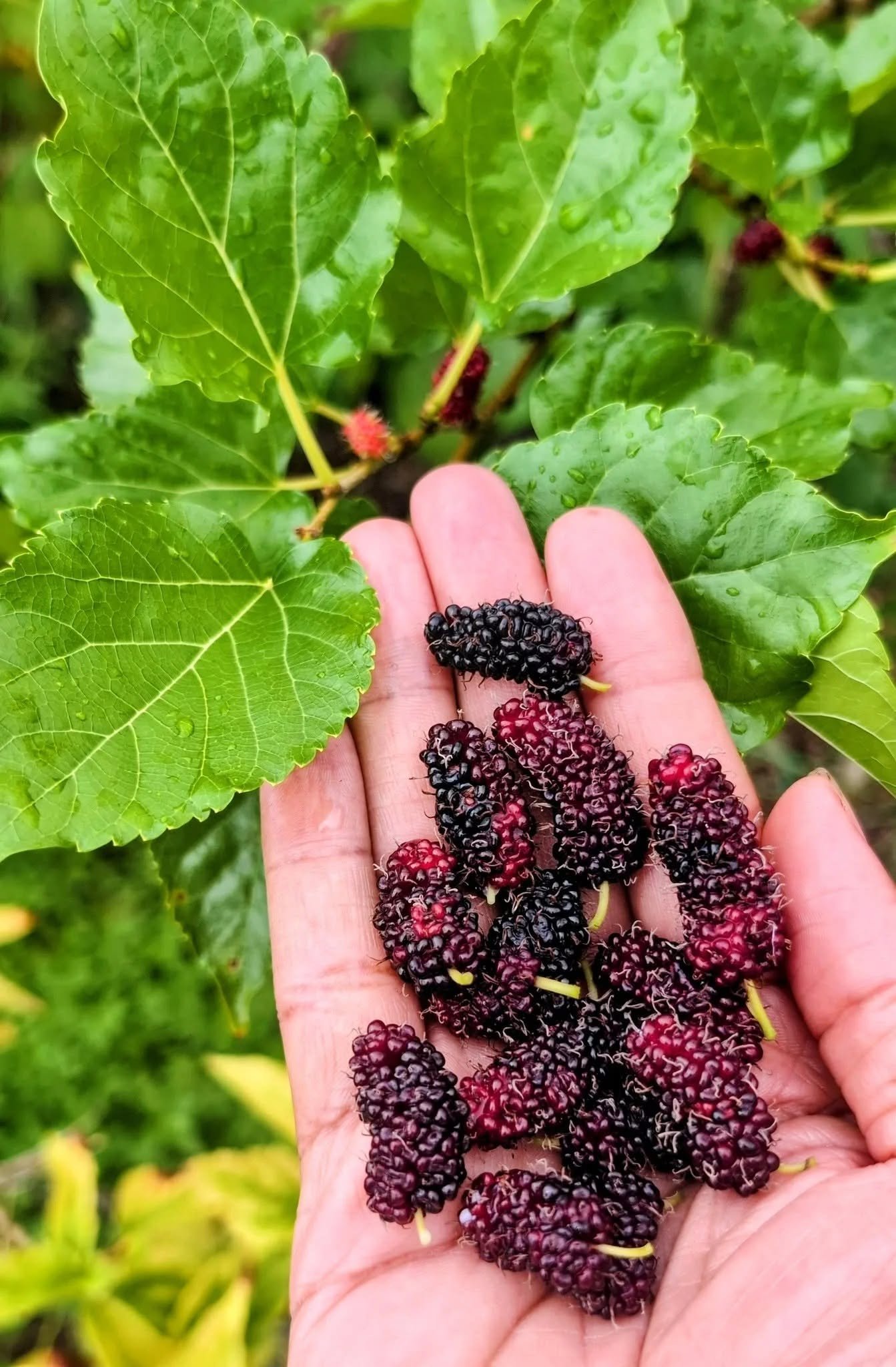
Most people know Mulberry as the tree that produces those sweet, staining berries.
But Morus alba has a much bigger medicinal story. Its leaves, fruit, and even root bark contain completely different groups of compounds—and some have been tested in human clinical trials.
Here are 5 surprising medicinal facts about the Mulberry fruit tree.
🩸 1. Mulberry Leaves Can Reduce the Blood-Sugar Spike After Eating Carbohydrates
Mulberry leaves contain an unusual natural compound called 1-deoxynojirimycin, or DNJ.
DNJ blocks alpha-glucosidase, an intestinal enzyme your body uses to break carbohydrates down into glucose that can be absorbed into the bloodstream.
When that enzyme is slowed, carbohydrates are digested more gradually and glucose enters the bloodstream more slowly.
The result?
A smaller rise in blood sugar after a carbohydrate-rich meal.
Human clinical trials using DNJ-rich Mulberry-leaf preparations have shown reduced post-meal blood-glucose and insulin spikes.
That’s what makes the mechanism particularly interesting.
Instead of only helping the body manage glucose after it reaches the bloodstream, Mulberry’s DNJ slows how quickly carbohydrate-derived glucose becomes available for absorption in the first place.
This tree is highly medicinal… but hardly anyone eats its fruit anymore 👀