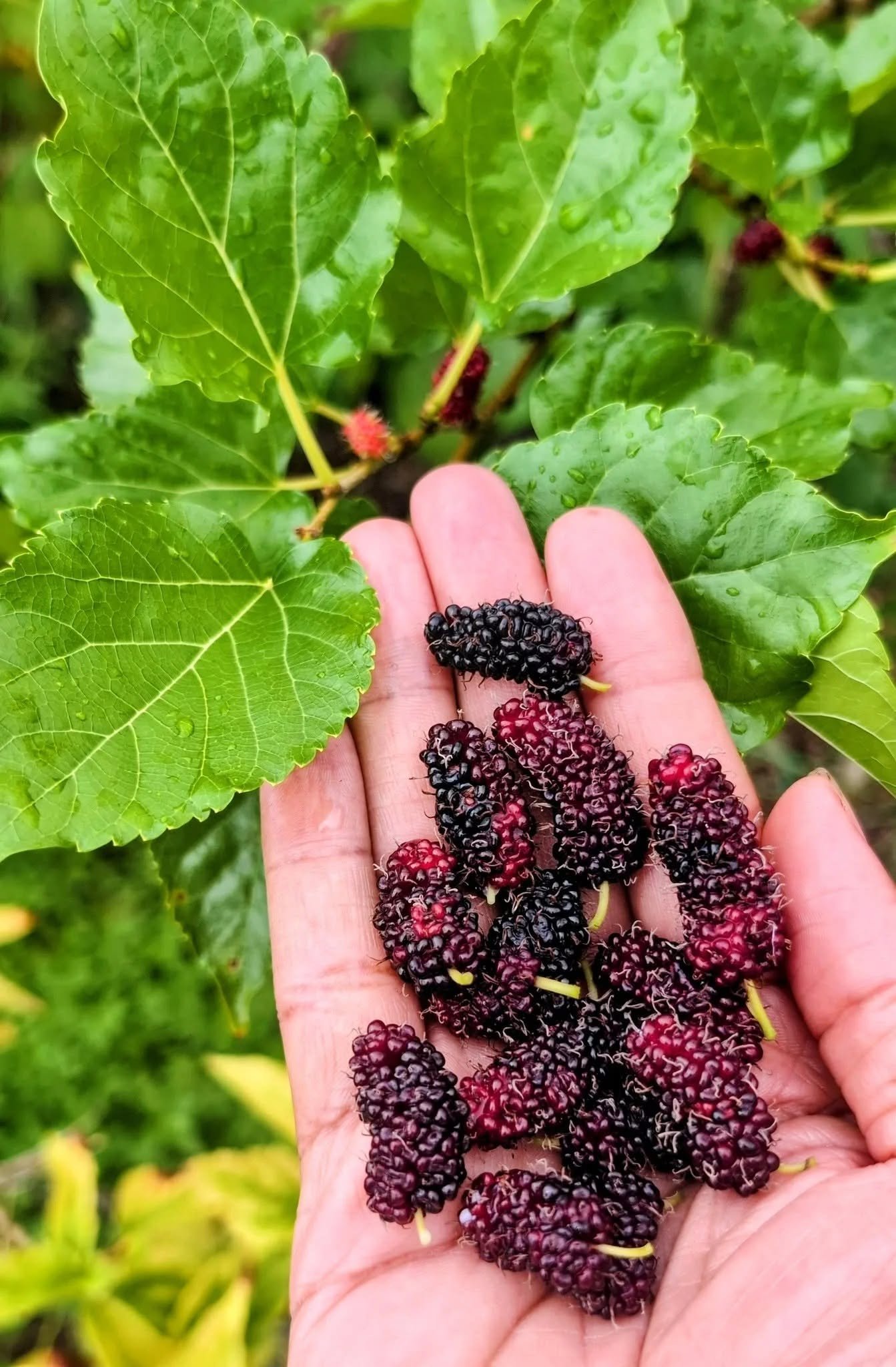
🫐 5. Dark Mulberries Carry a Completely Different Medicinal Chemistry Than the Leaves
As Mulberries ripen into deep red, purple, or nearly black fruit, they accumulate large amounts of anthocyanins.
These include compounds such as cyanidin derivatives, along with rutin, quercetin, and chlorogenic acid.
Experimental studies of Mulberry fruit and anthocyanin-rich fractions have demonstrated neuroprotective, anti-atherosclerotic, glucose-regulating, lipid-lowering, and anti-inflammatory effects.
So the leaves and berries aren’t simply two versions of the same medicine.
The leaves are especially notable for their unusual DNJ iminosugar chemistry, which interferes with carbohydrate digestion.
The dark berries instead develop an anthocyanin-rich chemistry that acts through completely different biological pathways.
This tree is highly medicinal… but hardly anyone eats its fruit anymore 👀